



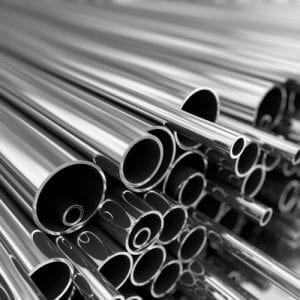
Stainless steel is the name of a family of iron-based alloys known for their corrosion and heat resistance. One of the leading stainless steel characteristics is its minimum chromium content of 10.5%, which gives it superior corrosion resistance compared to other types of steel. Like other steels, stainless steel is composed primarily of iron and carbon, but with the addition of several other alloying elements, the most prominent being chromium. Other common alloys in stainless steel are nickel, magnesium, molybdenum, and nitrogen.
Properties of Stainless Steel
Stainless steel has many desirable properties that contribute significantly to its widespread application in making parts and components across many industrial sectors. Above all, its chromium content makes it highly resistant to corrosion. The 10.5% minimum content makes steel approximately 200 times more corrosion-resistant than steel without chromium. Other favorable stainless steel characteristics for consumers are its high strength and durability, high and low-temperature resistance, increased formability and easy fabrication, low maintenance, long-lasting, attractive appearance, and environmentally friendly and recyclable. Once stainless steel is serviced, it must not be treated, coated, or painted.
- Corrosion resistant
- High tensile strength
- Very durable
- Temperature resistant
- Easy formability and fabrication
- Low-maintenance (long-lasting)
- Attractive appearance
- Environmentally friendly (recyclable)
Grading Systems for Stainless Steel
There are many numerical grading systems for stainless steel, designated according to their composition, physical properties, and applications. Each type of stainless steel is classified by its series number and then assigned a numerical grade. The most popular series numbers are 200, 300, 400, 600, and 2000. The most common grades are type 304 and 316, consisting of austenitic chromium-nickel alloys. Cutlery-grade stainless steels are found in the 400 Series, derived from ferritic and martensitic chromium alloys. Type 420 is known as surgical steel, and type 440 is known as razor blade steel.
For more information, see our page on stainless steel types.
Stainless Steel Characteristics
The family of stainless steels is primarily classified into four main categories based on their crystal microstructure.
Ferritic
Ferritic steels are 400-grade stainless steels noted for their high chromium content, ranging from 10.5% to 27%. They have magnetic properties, too, and offer good ductility, tensile-property stability, and resistance to corrosion, thermal fatigue, and stress-corrosion cracking.
Ferritic Stainless Steel Applications
Typical applications for ferritic stainless steels include automotive components and parts, the petrochemical industry, heat exchangers, furnaces, and durable goods like appliances and food equipment.
Austenitic
Perhaps the most common category of stainless steel, austenitic grade steels are high in chromium, with varying amounts of nickel, manganese, nitrogen, and some carbon. Austenitic steels are divided into the 300 series and 200 series subcategories, which determine which alloys are used. The austenitic structure of the 300 series is distinguished via the addition of nickel. The 200 series primarily uses the addition of manganese and nitrogen. Grade 304 is the most common stainless steel.
Austenitic Stainless Steel Applications
Sometimes referred to as 18/8 because of its 18% chromium and 8% nickel, it is used in kitchen equipment, cutlery, food processing equipment, and structural components in the automotive and aerospace industries. Grade 316 is another common stainless steel. It makes a wide range of products, such as food preparation equipment, laboratory benches, medical and surgical equipment, boat fittings, and pharmaceutical, textile, and chemical processing equipment.
Read more about 304 vs 316 stainless steel
Martensitic
Martensitic stainless steels are in the 400 Grade series of stainless steels. They have a low to high carbon content, and contain 12% to 15% chromium and up to 1% molybdenum. It’s used whenever corrosion resistance and-or oxidation resistance are required along with either high strength at low temperatures or creep resistance at elevated temperatures. Martensitic steels are also magnetic and possess relatively high ductility and toughness, which make them easier to form.
Martensitic Stainless Steel Applications
Applications for martensitic stainless steels include a wide range of parts and components, from compressor blades and turbine parts, kitchen utensils, bolts, nuts and screws, pump and valve parts, dental and surgical instruments, to electric motors, pumps, valves, machine parts sharp surgical instruments, cutlery, knife blades, and other cutting hand tools.
Duplex
As the name implies, duplex stainless steels possess a mixed microstructure of ferrite and austenite. The chromium and molybdenum content is high, with 22% to 25% and up to 5%, respectively, with very low nickel content. The duplex structure gives the stainless steel many desirable properties. For starters, it offers double the strength of ordinary austenitic or ferritic stainless steels, with excellent corrosion resistance and toughness.
Duplex Stainless Steel Applications
Designated in the 2000 Grade series, duplex stainless steel is ideal for applications in demanding environments such as in chemical, oil, and gas processing and equipment, marine, high chloride environments, pulp and paper industry, cargo tanks for ships and truck, and bio-fuels plants, chloride containment or pressure vessels, transportation, heat exchanger tubes, construction, the food industry, desalination plants, and components for FGD systems.
Contact the Stainless Steel Experts at Eagle Stainless
Stainless steel’s unique strength, corrosion resistance, and durability make it an ideal material for various industries. Whether you need precision tubing for medical applications or robust solutions for industrial use, Eagle Stainless has the expertise and inventory to meet your needs. Contact us today to discuss how our high-quality stainless steel products can support your next project.